Vienna outreach side event on HCoC

31 May 2013

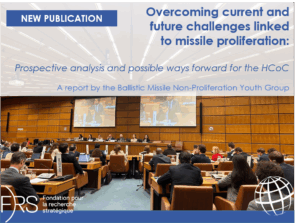
On 31 May 2013, the FRS organised, on behalf of the European Union, an outreach event in support of both the HCoC and ballistic missile non-proliferation. This meeting took place at the Vienna International Centre in the margins of the HCoC annual meeting of subscribing states.

AGENDA

PRESENTATIONS

  • H.E. Györgyi MARTIN ZANATHY, Permanent Representative of the European Union to the International Organisations in Vienna
  • H.E. Tsutomu OSAWA, Permanent Representative of Japan to the International Organisations in Vienna; HCoC Chair
  • H.E. Alfredo LABBÉ VILLA, Permanent Representative of Chile to the International Organisations in Vienna
  • Dr. Xavier PASCO, Senior Research Fellow, Foundation for Strategic Research
Research Papers

The Hague Code of Conduct and Space

This paper considers the dual approach of the Code by analysing the similarities between launchers and ballistic missiles in light of new technical developments, and assessing the risk of missile technology proliferation. It also assesses the new trends and developments in the space sector that may have an impact on the ability of the HCoC to remain relevant in its efforts to curb the proliferation of ballistic launchers.

Read More »
Issue Briefs

The HCoC and Northeast Asian States

A majority of Northeast Asian states currently possess or seek to acquire ballistic missiles, producing a missile race and an increase in the number of tests as states are developing their capabilities further. Proliferation risks also remain high, and it is noteworthy that only South Korea and Japan have joined the MTCR.

Read More »
Other publications

Missile Control?

This issue of Disarmament Forum assesses the current situation concerning missiles and investigates future prospects for control. Existing devices, such as the Missile Technology Control Regime and the Hague Code of Conduct (HCOC), UN Security Council resolution 1540 and the Proliferation Security Initiative, are all attempts at ameliorating some aspects of missile-related problems, as are the various bilateral confidence-building measures already in operation.

Read More »