New York outreach side event on HCoC 2013

11 October 2013

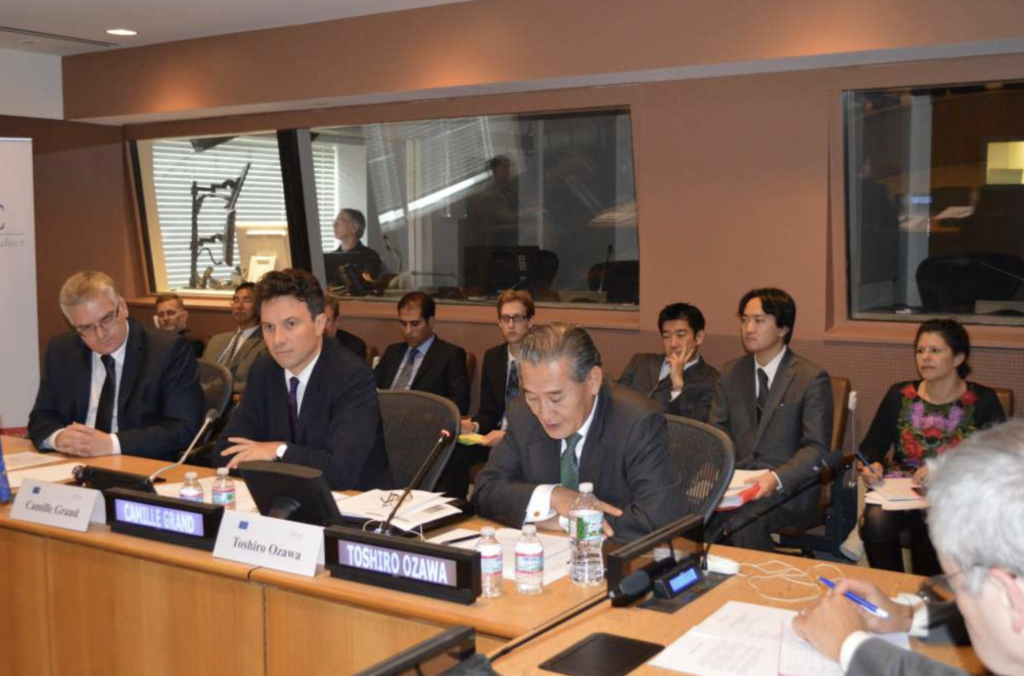
On 11 October 2013, the FRS organised, on behalf of the European Union, an outreach event in support of both the HCoC and ballistic missile non-proliferation. This meeting took place at the United Nations Headquarters in New York, in the margins of the UN General Assembly First Committee.

AGENDA

PRESENTATIONS

  • Amb. Jacek BYLICA, Principal Advisor and Special Envoy for Non-Proliferation and Disarmament, European External Action Service
    • EU action to promote the non-proliferation of WMD delivery systems
  • Amb. Toshiro OZAWA, Permanent Representative of Japan to the International Organisations in Vienna; HCoC Chair
    • The role of HCoC and the aims for the Japanese presidency
  • Camille GRAND, Director, Foundation for Strategic Research
    • Assessing and responding to current and future threats posed by ballistic missile proliferation
Issue Briefs

The HCoC at Twenty

Since its inception and through the collective outreach efforts of its Chairs, the Executive Secretariat, the EU and the United Nations, the Hague Code of Conduct has received growing support. It has improved its efficiency and implementation through a series of initiatives which have made it more easily accessible.

Read More »
Issue Briefs

The HCoC and South Asia

India’s and Pakistan’s ballistic missiles are mostly designed as delivery vehicles for their nuclear weapons. While intrinsically linked to their national security, ballistic missiles also have regional security implications for South Asia. Non-proliferation and arms control efforts have so far been aimed at the bilateral level. Subscription to other instruments including the HCoC remains low in the region, although India joined the HCoC in 2016.

Read More »
Research Papers

Hypersonic missiles: Evolution or revolution for missile non-proliferation and arms control instruments?

After listing major programmes and key drivers beyond the acquisition of these technologies, this paper considers their development under the prism of arms control, and analyses whether current mechanisms (non-proliferation arrangements, bilateral arms control treaties and confidence-building measures) dealing with missiles are adapted to these weapons.

Read More »