New York outreach side event on HCoC 2013

11 October 2013

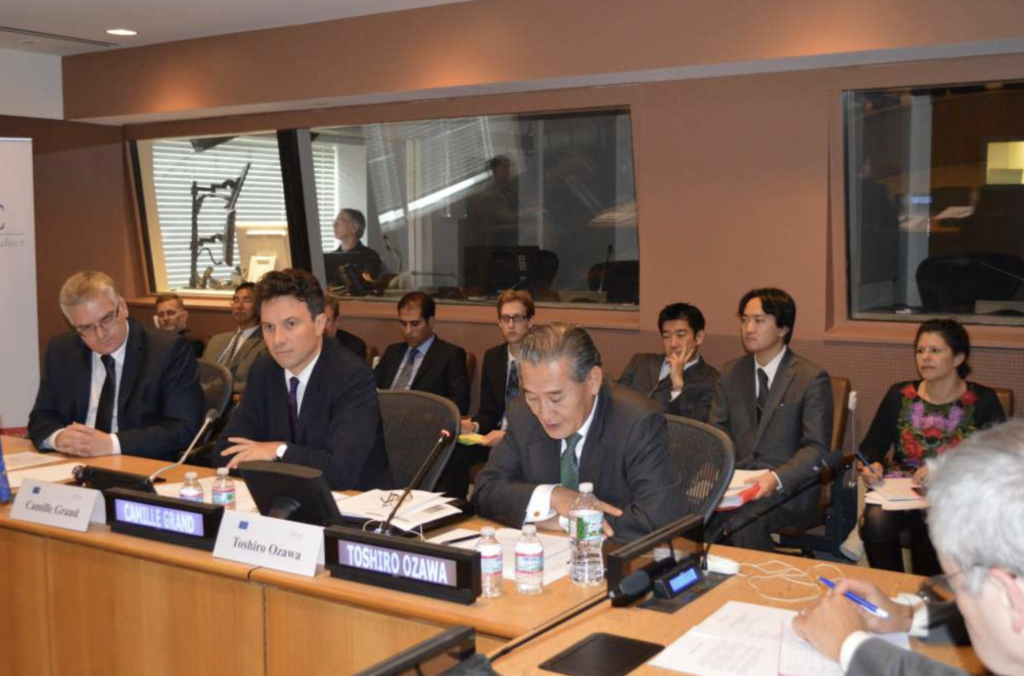
On 11 October 2013, the FRS organised, on behalf of the European Union, an outreach event in support of both the HCoC and ballistic missile non-proliferation. This meeting took place at the United Nations Headquarters in New York, in the margins of the UN General Assembly First Committee.

AGENDA

PRESENTATIONS

  • Amb. Jacek BYLICA, Principal Advisor and Special Envoy for Non-Proliferation and Disarmament, European External Action Service
    • EU action to promote the non-proliferation of WMD delivery systems
  • Amb. Toshiro OZAWA, Permanent Representative of Japan to the International Organisations in Vienna; HCoC Chair
    • The role of HCoC and the aims for the Japanese presidency
  • Camille GRAND, Director, Foundation for Strategic Research
    • Assessing and responding to current and future threats posed by ballistic missile proliferation
Other publications

The HCoC: relevance to African states

The Hague Code of Conduct against Ballistic Missile Proliferation (HCoC), which came into effect on 25 November 2002, aims to strengthen efforts to curb ballistic missile proliferation worldwide, thereby supplementing the Missile Technology Control Regime, which restricts access to technologies needed to develop such systems. Ballistic missiles are the favoured delivery vehicles for weapons of mass destruction and therefore have a destabilising effect on regional and global security.

Read More »
Research Papers

The HCoC: current challenges and future possibilities

The Hague Code of Conduct (HCoC), currently the only game in town on its topic, marked its 10th anniversary in 2012. It has generated membership comfortably into three figures, and its supporters have tried valiantly to help it make progress. However, even its most enthusiastic admirers would concede that has not fulfilled the hopes and expectations of its founders when they gathered for the opening ceremony in November 2002.

Read More »
Other publications

North Korean Short Range Systems: Military consequences of the development of the KN-23, KN-24 and KN-25

This study focuses on the new systems introduced, and assesses their potential impact as conventional weapons and as non-conventional weapons. Through an analysis of the possible capacities of these systems, this study examines their consequences on North Korean strategy. It concludes by exploring what this change of strategy may lead to, in military terms, and in political terms, on the Korean peninsula.

Read More »